Modernization of highly complex administrative procedures

UX/UI DESIGN & ACCESSIBILITY

Focus on accessibility

Context & Domain

Client project in the public sector

Role

UX / UI Designer

Timeframe

January 2025 – today​

Methods used

  • Requirements gathering & analysis
  • UI ideation
  • High-fidelity wireflows
  • Prototyping

Tools used

  • Figma
  • Axure RP
  • NVDA Screenreader
  • Confluence
  • Jira

Team Constellation

  • 1 UX/UI designer
  • multiple product owner
  • multiple front-end & back-end developer

The modernization of complex administrative processes is a multi-year transformation process that aims to make central processes fit for the future. The focus is on digitization and standardization in order to make processes more efficient and improve the management of complex systems in the long term.

Thumbnail mit UX-Prozessdiagrammen und Wireframes zur Benutzerführung einer Software.

Challenges

  • Complex technical expertise and digitization based on the legacy application
  • Low UX maturity and testing with users
  • Lack of knowledge and need about accessibility in the team

Goal

  • Simplify complex business processes
  • Reduce the workload for administrators
  • Provide a barrier-free, accessible, and consistent user interface
  • Reliably map strict legal and technical requirements

Approach: Requirements gathering & introduction of an agile working environment

Collection and analysis of requirements

Understand requirements

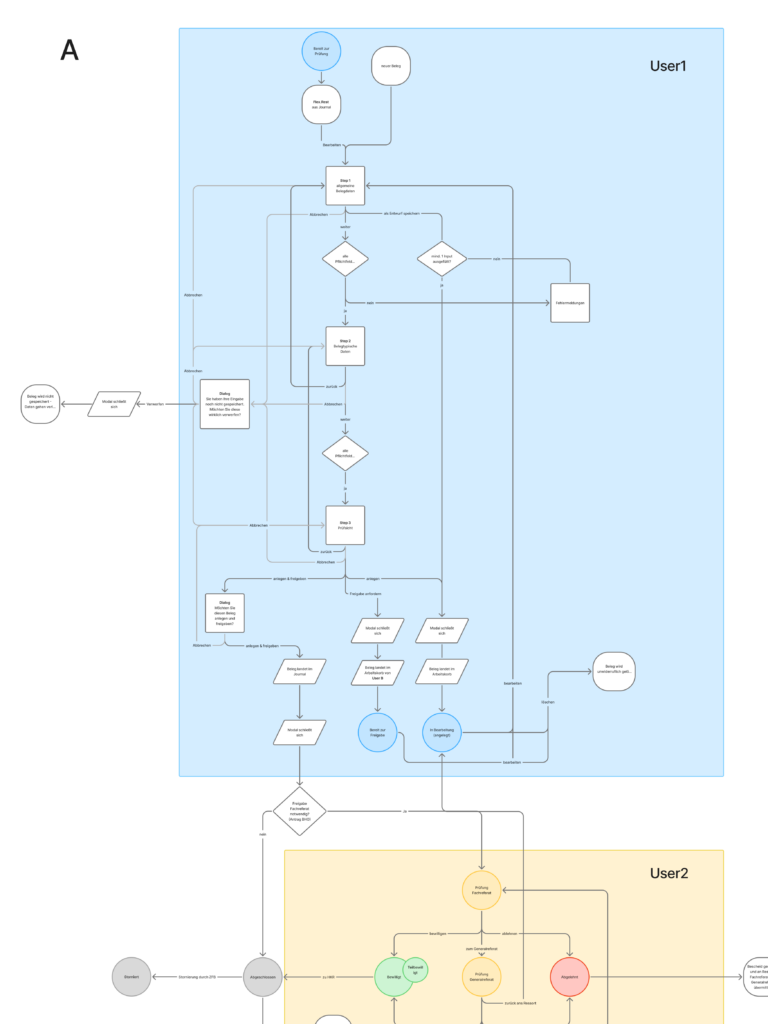
In close collaboration with the designated Product Owner, we have systematically identified the requirements through a comprehensive understanding of the relevant political and legal framework. The initial step was to analyze the existing application. The results were made available to all team members using UX methods, such as user journeys.

Flussdiagramm zur Darstellung der Interaktionen von Nutzenden in einer Webanwendung.
Requirements analysis workflow

Concept

UI Ideation & Wireflows

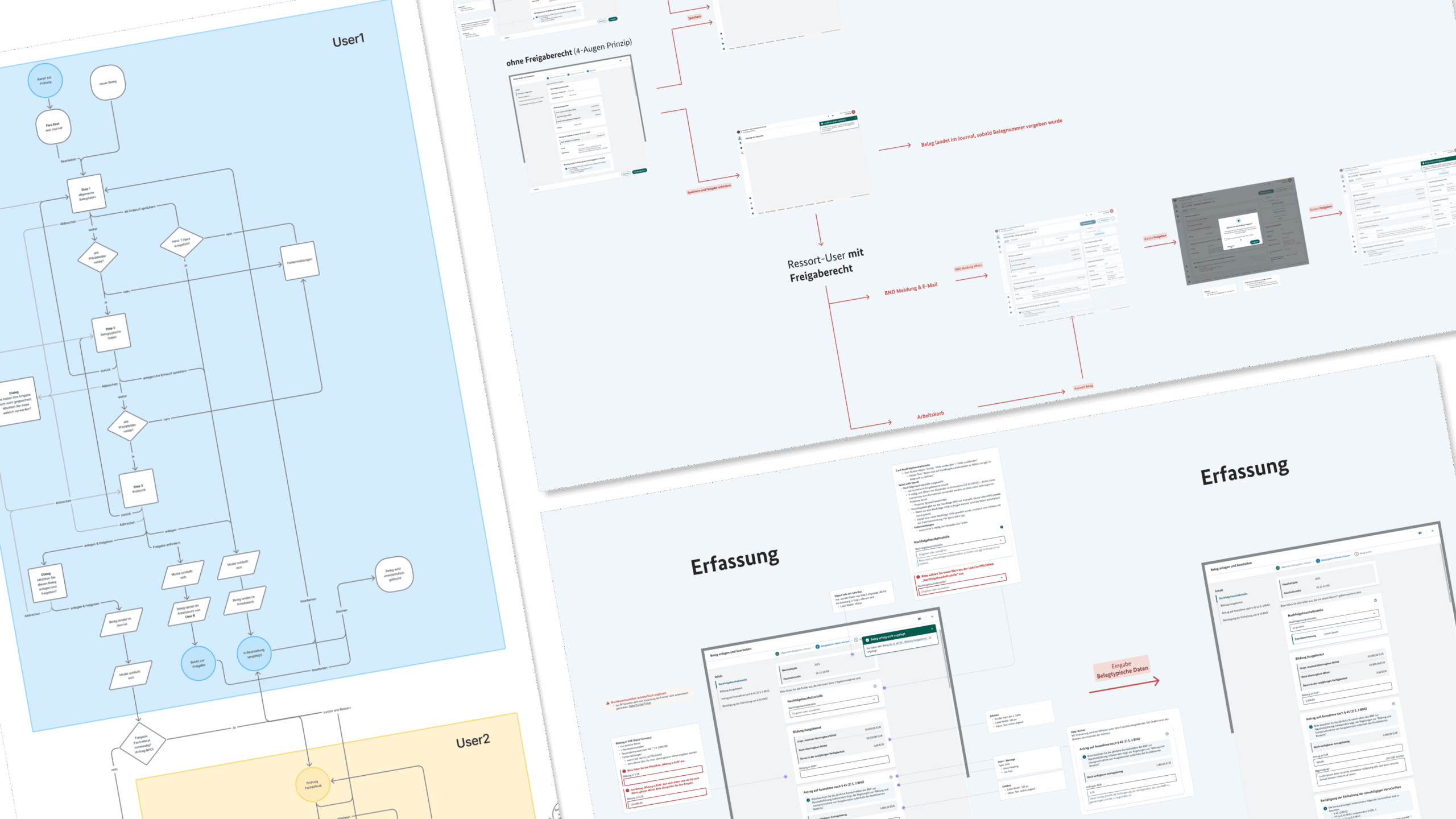
Based on the collected requirements, high-fidelity wireframes were developed in Figma and Axure RP. The primary objectives included simplifying complex tables, establishing a clear information architecture, and adhering to WCAG guidelines (at least AA). The wireflows were closely coordinated with the POs and development to minimize comprehension issues.

Flussdiagramm aus UI Designs
Excerpt from the high-fidelity wireflows

Establishment of Agile work practices.

Following the initial request for proposal, the collaboration with the development team was redefined. We established a Kanban process that integrates UX/UI design, developer handoffs, and UX reviews. Confluence serves as the primary documentation platform, with Jira being utilized for ticket management.
Results

  • Establishment of an Agile Framework
  • Fundamental Usability Enhancements
  • Continuous Adherence and Compliance with the BITV, despite complex technical requirements